

How an Electric Car Works: Complete Guide

The technology behind electric cars can seem complicated at first glance. If you’re seeing an electric car for the first time or reading about it online, it can be intimidating.
Words like “inverter,” “kWh,” or “regenerative braking” aren’t part of our everyday vocabulary. But if we had a simple, clear explanation for them that everyone could understand, it could make all the difference.
This is exactly the purpose of this guide. We want to help you understand the advantages of an electric car. How it works step by step and what you need to know. So you can make an informed decision when you are thinking about taking the step towards an EV (electric vehicle).
Because the adoption of electric cars is no longer just a trend. Studies by the International Energy Agency show, as we mentioned in a podcast about mobility, that electric cars are already the future. They are part of a broader transition towards an entirely sustainable ecosystem. And if you think about your impact on the environment, how you protect the planet, and what you leave behind for future generations, choosing an electric vehicle is more than logical.
Why is it important to understand how electric cars work?
Once you understand how an electric car really works, you realize that:
- it’s simpler than you might think;
- it is more efficient than a classic car and has many more advantages;
- and it can become a natural choice, not just “environmentally” but also as a “lifestyle”.
Choosing an electric vehicle means more than joining a trend. It means:
- Reducing the carbon footprint by eliminating local emissions;
- Lower long-term costs – from purchase, to charging and maintenance;
- A more enjoyable driving experience, with instant acceleration, no noise and no vibrations.
Read this article to the end and we will try to show you everything you need to know to understand how an electric car works. How it charges, how it recovers energy, and how all its systems work together to give you a cleaner, more economical, and more efficient life.
Electric car vs Classic car – what’s the real difference?
We think a book could be written on this subject alone. Although on the outside an electric car doesn’t look very different from a classic one, the differences are like“”from Heaven to Earth”.
Both cars have four wheels, a steering wheel, seats, and they get you from point A to point B. But the way they do that is different. And under the hood, the differences start to become essential. This is where the way this type of vehicle works begins to completely change.
So, an electric car is different from the way it’s designed, to how you maintain it, how you fuel it, and how you drive it. And all of these differences are to your advantage and the environment’s advantage.
🔧 What you find under the hood of an electric car – the main components of an EV
So, an electric car is different from the way it’s designed, to how you maintain it, how you fueUnlike a car with an internal combustion engine, an electric car is much simpler. And it has infinitely fewer parts. This is where one of the most important advantages comes from: low maintenance costs.l it, and how you drive it. And all of these differences are to your advantage and the environment’s advantage.
Here are the components of an electric vehicle:
- Electric traction motor – sets the wheels in motion, using energy from the main battery.
- Traction batteries (main battery) – store the electrical energy needed for movement.
- Charge port – the place where the charging cable is connected to power the battery.
- DC/DC converter – converts high voltage (direct current) from the main battery into low voltage for the car’s auxiliary components (e.g. headlights, infotainment) and for recharging the auxiliary battery.
- Auxiliary battery (in 100% electric cars) – powers the vehicle’s electronics (lights, display, multimedia system).
- Power electronics controller – manages the flow of energy from the battery to the motor and controls the speed and torque of the car.
- Onboard charger – converts alternating current (AC) from the charging port to direct current (DC) to charge the traction battery. In addition, it communicates with the charging equipment and monitors battery parameters such as voltage, current, temperature and charge level during charging.
- Thermal (cooling) system – maintains the optimal temperature for the battery, motor and electronic components.
- Electric transmission – transmits mechanical energy from the engine to the wheels. Unlike classic gearboxes, this usually has only one gear.
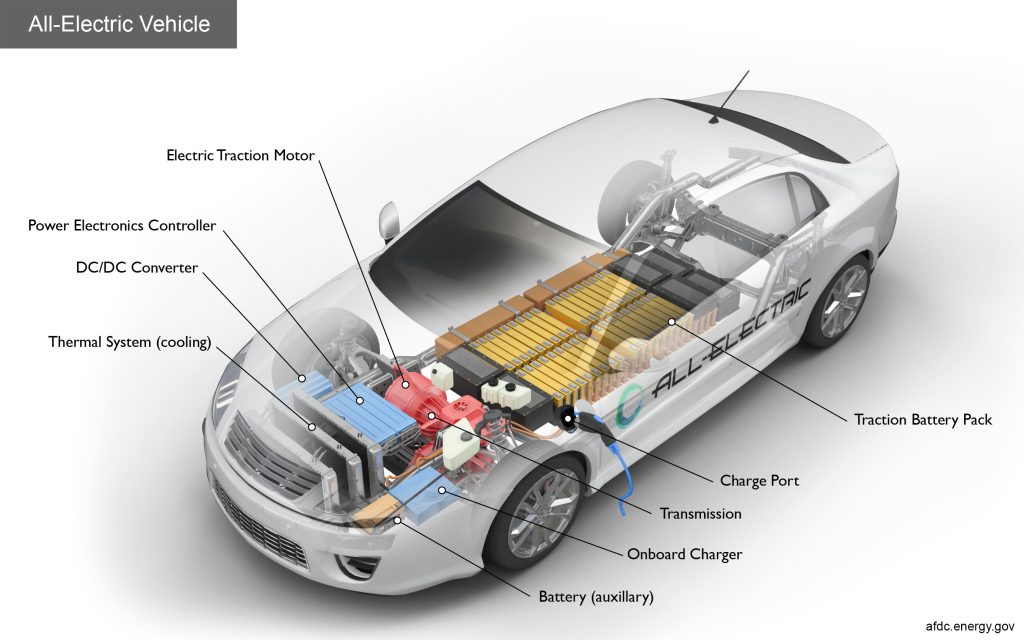
As you can see, there are no pistons, engine oil, filters or exhaust. The entire system of an electric car is much simpler and more compact. And that makes it even more efficient. Because the electrical energy in the battery is converted directly into movement, with minimal losses.
⚡ Differences in efficiency and consumption
One of the biggest differences between an EV and a classic car is energy efficiency. Studies show that when it comes to efficiency, classic cars have virtually no chance of competing with electric cars.
According to the DOE (United States Department of Energy), EVs convert over 77% of electrical energy into motive power. While a classic car can convert less than 30% of the energy produced from fuel into motive power.
This means that an electric car will consume less energy for the same distance traveled. This automatically means a lower cost per kilometer traveled.
🛠️ Differences in maintenance and costs
Due to the lack of classic mechanical components, we said above that an electric car does not require much maintenance. And that means a much lower maintenance cost.
- Don’t worry about changing oil, spark plugs or fuel filters.
- No drive belts or clutches and no stress caused by their repairs.
- Brakes wear out more quickly thanks to regenerative braking (you’ll discover details about how the entire braking system of an EV works later in the article).
Even the costs of powering it differ radically.
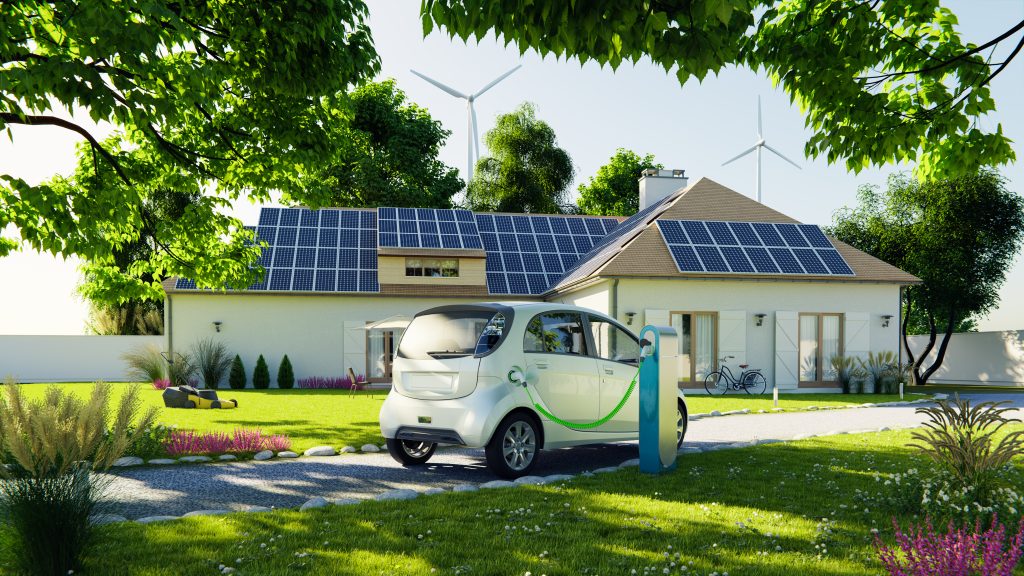
Plus, the EV also offers you a certain independence. Electricity is a household energy resource, which can be obtained through independent systems. A photovoltaic system turns you into a producer of unlimited energy to power your electric car.
And even if you choose to charge at the station, compared to the cost of charging with gasoline or diesel, you will come out much more advantageous.
You can also find out here how much it costs to charge your EV in the EV SPOTS network, for example. You will find each option in detail + the associated cost. And with a simple calculation that takes into account the autonomy and the distance to travel, you can see how much it costs to get from point A to point B with your electric vehicle.
However, to save you the calculations, we present you the conclusions of a study. The Natural Resources Defense Council showed that an EV is up to 4.8 times more efficient to drive, over the same distance, than a combustion car. And overall, taking into account maintenance costs, an electric car could cost 40% less than a classic car.
🔊 Differences in driving experience
Electric cars offer immediate throttle response, are quiet and vibration-free. This provides a smoother driving experience. Engine torque is available instantly, which means faster acceleration. An advantage felt every time you start from a standstill. In addition, the performance of the engines is better, as shown by the DOE.
Real-world examples of EV performance (according to manufacturer data):
| Tesla Model | acceleration 0–100 km/h |
|---|---|
| Model 3 Performance | ≈ 3,1 seconds |
| Model S Long Range | ≈ 3,2 seconds |
| Model S Plaid | ≈ 2,1 – 2,3 seconds |
By comparison, a sports car with a 300 hp gasoline engine reaches 100 km/h in 5–6 seconds. That makes the difference noticeable.
Goodbye unpleasant fuel odors, goodbye annoying noises, and goodbye vibrations and unpleasant driving sensations.
So, let’s summarize:
⚖️ Comparison table: Electric car vs Classic car – internal combustion engine
| Features | Electric Car ⚡ | Classic Car 🔥 |
|---|---|---|
| Energy source | Li-Ion battery (electricity) | Internal combustion engine (petrol/diesel) |
| Energy efficiency | over 77% | below 30% |
| Local emissions | Zero | CO₂, NOx, fine particles |
| Maintenance | Reduced (no oil, spark plugs, filters, etc.) | High (frequent changes) |
| Acceleration | Instantaneous, 0–100 km/h in 2–3 sec. | Gradual, 0–100 km/h in 5–6 sec. |
| Noise | Very reduced | High (engine, exhaust) |
| Gear box | No (1 direct stage) | Yes (manual or automatic) |
| Cost per 100 km | under 30 lei* | over 50 lei (gasoline/diesel)* |
| Charging / Power supply | Home, public, fast stations | Petrol stations |
| Regenerative braking | Yes, it recovers energy | No |
* Potrivit unui studiu realizat de Comisia Europeană de Transport și Mediu (T&E) costurile medii estimate pentru Europa (înainte de accize și taxe locale) pentru încărcarea unui EV sunt sub 6€ /100 km. În timp ce la un vehicul clasic ar costa aproape dublu.
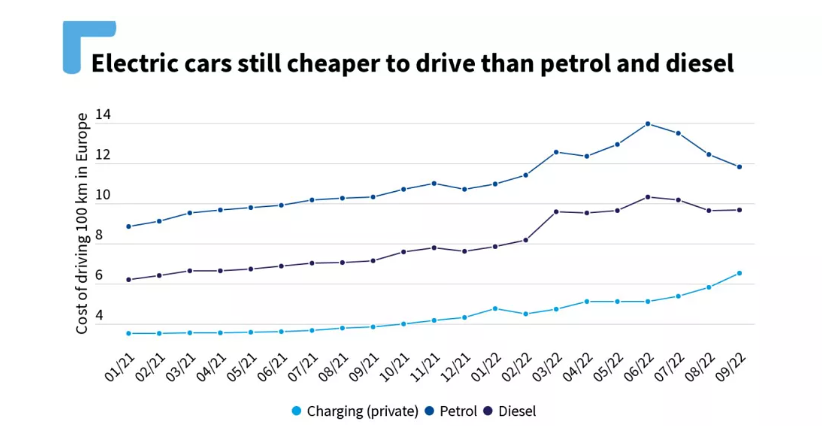
Differences in charging costs – the situation in Romania
We can also do a quick calculation for the situation in Romania in 2025.
✅ 1. EV Costs – Home Charging
🔹 Source: Average household electricity price in Romania 2025 – despre-energie.ro
🧾 ANRE / Electrica / Enel – regulated price between 0.68–1.50 lei/kWh (for most suppliers, in 2025)
🔋 Electric car consumes ~15–18 kWh / 100 km
🧮 15 kWh × 1.2 lei = ~18 lei / 100 km (charging at home, average cost)
✅ 2. EV Costs – Public Charging (Fast Stations)
🔹 Source: EV SPOTS prices
- EV SPOTS: Public rates (at the moment when this article was written): 2.39 – 2.87 lei / kWh, depending on speed and station
✅ 2. EV Costs – Public Charging (Fast Stations)🧮 15 kWh × 2.6 lei = ~39 lei / 100 km (ultra-fast charging)
📉 Charging stations (50 kW DC) can drop to ~ 35 lei / 100 km
📉 Charging stations (50 kW DC) can drop to ~ 35 lei / 100 kmSo, if you take all these aspects into account, the difference between an electric car and a classic one is clear. It comes down to cost, but also to efficiency and overall driving comfort.
How an electric car works – simply explained
Many electric cars rely on cutting-edge technology. And that may sound complicated and daunting. But, at its core, every electric car works on a simple principle.
Electrical energy stored in a battery is converted into movement by an electric motor.
So, fully electric vehicles, also known as battery electric vehicles (BEVs), use an electric motor instead of an internal combustion engine. To power this motor, electric vehicles use a traction battery (essentially a large battery pack). And to charge these batteries, they must be plugged into a wall outlet or special charging equipment – also called electric vehicle charging stations (EVSEs).
Because they run solely on electricity, these vehicles emit zero exhaust gases and have no tailpipe. And they don’t contain any mechanical components specific to conventional fuels. They don’t have a fuel pump, pipes or tank. So, everything is much simpler.
Let’s see, what happens when you “press the accelerator” on an electric car?
- Press the accelerator ➡️
- The order reaches the inverter ➡️The inverter is the “energy brain” of your car. What does it do? It converts direct current (DC) from the battery* into alternating current (AC) for the motor.
*The battery is the “tank” of the car in this case, but it works completely differently than a classic tank. It stores electrical energy in the form of direct current (DC), which it then uses to power the engine. - The inverter sends the electric current to the motor ➡️The electric motor is the “heart of the car”. It takes the current and forms a magnetic field that sets in motion a rotating part (the rotor) and instantly drives the wheels, making them spin, without combustion, without changing gears, without emissions – resulting in instant acceleration.
- The engine produces movement ➡️
- And so the wheels instantly turn
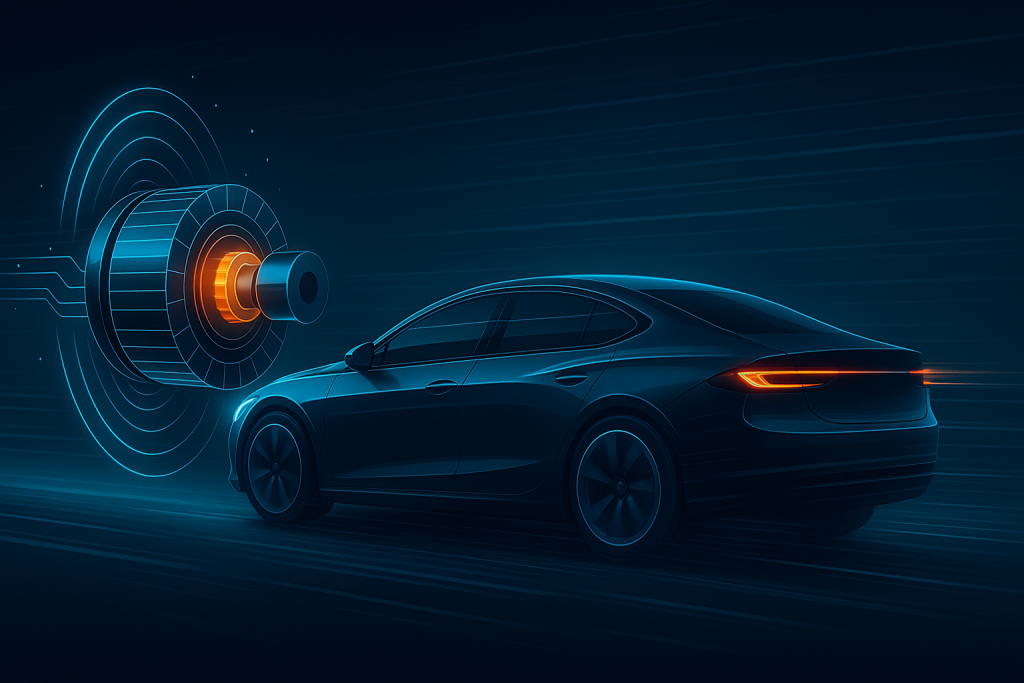
Okay, through this process the wheels start turning and the car starts moving.
But… How far does it go?
When we come to this question, 2 aspects come into play: the car’s battery capacity and the car’s range.
How do we understand how far the car will go based on battery capacity and total range?
Battery capacity is how much energy your car’s battery can store. It’s measured in kWh – a unit of energy measurement that indicates the total amount of energy stored, consumed, or produced.
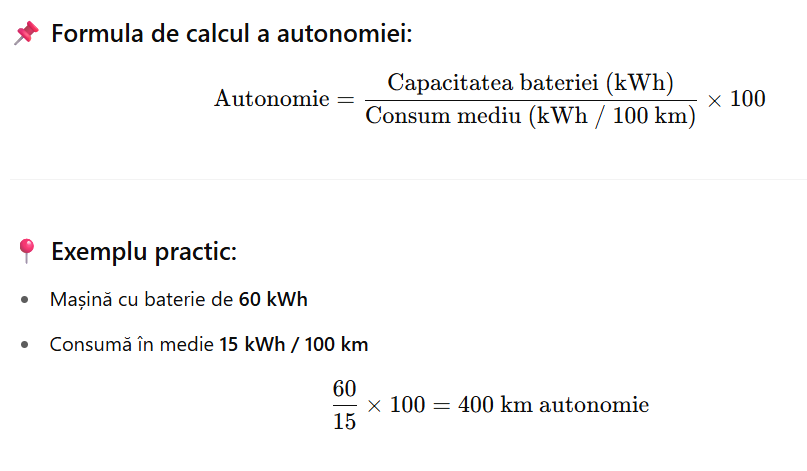
Autonomy is closely related to this battery storage capacity, because it is obtained by relating average consumption to this capacity.
Let’s take the example of a standard electric car, which consumes 15 kWh / 100 km. And, let’s say, it has a 60 kWh battery. Thus, it will offer an autonomy of about 400 km.
So, how are the 2 related?
After you’ve driven the 400km, you’ll need to charge the battery again.
And here comes into play a second unit of measurement kW – the unit of measurement of power – which tells you how fast you will charge the battery. Depending on the station you arrive at, this speed will be different. Because each station has a different power (measured in kW).
For example, if you charge at a 50 kW station, your battery will charge in 1.2 hours (72 minutes).
Therefore, when thinking about the operation of an electric car, you must take into account these 2 main aspects: battery capacity, car autonomy. And from these two comes the third aspect: charging time.
We will read about charging and all the details of this process below.
How does charging an electric car work?
If for classic cars “refueling” means going to the gas station, for electric cars it’s different. There are several charging options, depending on the time you have, where you want to spend your time and the power available.
Charging itself is not a complicated process. But you need to have a clear perspective on the options. On the different types of connectors and the different charging powers, depending on the station.
1. Connector types
Most modern electric cars in the EU are equipped with charging ports specially designed for 2 connectors:
- Type 2 – for AC charging
- CCS2 – for DC charging
This means that they are compatible with the stations we operate in the EV SPOTS network. Because all our stations have either Type2, CCS2, or combined connectors. In addition, we also have the CHAdeMO connector available, which is also for DC charging, but for older cars.
EV SPOTS stations are mostly 50kW + 22kW, providing access to 2 DC connectors (1 CCS2 and 1 CHAdeMO) and an AC connector (Type2).
2. Types of charging depending on the type of current
You saw here the demarcation between AC charging and DC charging. What does this mean?
AC charging is “alternating current” charging – the standard type of charging, most often used at home, in the office or at public stations with Type 2 sockets. It is a slower charge, as the power of AC connectors is often in the range of 3.7 – 22 kW. This means that a full charge, depending on your battery, can take up to 10 hours.
DC charging is “direct current” charging – fast charge or ultra fast – so a fast or ultra-fast charge. This is because here we are talking about connectors with a typical power of +50 kW, reaching even 350+ kW. This way you will be able to charge fully, depending on your battery (if the battery has the capacity to draw current) and in 30 – 40 minutes.
🧭 In short:
| Charging type | Power (kW) | Estimated duration | Where is it done? | Recommended for |
|---|---|---|---|---|
| Socket at home | 2,3 – 3,7 kW | 10 – 30 h | Hous, garage | Occasional driving, slow charging |
| AC station | 7,4 – 22 kW | 4 – 10 h | Home, public stations, office | Urban travel (home – office) |
| DC express station | 50 – 350+ kW | 20 – 60 min (20–80%) | Special stations, charging hubs | Long roads, rapid transit |
3 How does energy get to the car?
The flow is simple: from the grid (or from the photovoltaic system, where applicable) ➝ the current reaches the charging station (AC/DC) ➝ from where it goes to the car’s inverter (if you’re charging AC) ➝ then it reaches the battery.
In AC stations, the conversion of current into a usable form for the battery is done by the car’s internal inverter. In DC stations, the energy goes directly to the battery, much faster.
4. Simplify the process with the EV SPOTS app
Our stations are integrated into a continuously expanding national network. And we have built everything so that you have an easy, transparent and advantageous charging experience. All through a friendly and easy-to-use mobile application.
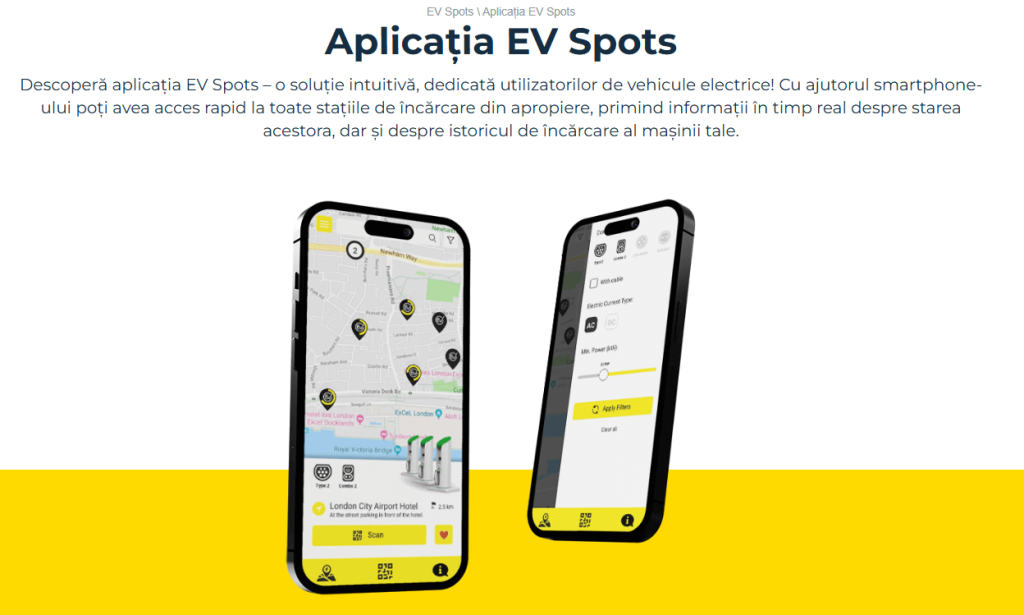
With the help of the EV SPOTS app:
- You can see the available stations in real time and see if they are working, free or busy.
- You can pay for charging directly from the app and benefit from an advantageous offer (0.5 RON / kWh cheaper than the price displayed at the station).
- You receive clear and transparent reports on loading costs and duration, history, billing, etc.
- You can reserve the station 15 minutes before you arrive and at some stations you can activate the autocharge function (you memorize the connector and the second time charging starts automatically).
- You receive a tax invoice for the payments made.

How do you gain energy and increase range – through regenerative braking?
One of the smartest features available on an electric car is regenerative braking. What exactly is it and how does it work?
Imagine that every time you brake, instead of wasting energy, your car recovers it! And you can use it again. By doing this, you can actually gain autonomy. And no, it’s not magic!
It’s just one of the smartest and most sustainable systems in an electric vehicle.
Instead of converting braking energy into heat (like conventional brakes do), an electric car converts that energy back into electricity—and sends it to the battery. That means… you’re “recharging” your car every time you brake.
It’s a mechanism that not only saves you energy, but completely changes the way you drive.
Some electric cars operate on the “one-pedal” principle. Regenerative braking is so effective that when you lift your foot off the accelerator, the car slows down significantly (it doesn’t “free-run” like a classic car). So, in the city, you can reduce speed without pressing the brake pedal. At low speeds, you can even stop the car completely just by releasing the accelerator.
You might be wondering now: “so if I stop pressing the brakes, how do I regenerate?”
➡️ When you take your foot off the accelerator, the car activates regenerative braking instead of the classic brake.
➡️ It’s not about avoiding braking, but replacing it with a smarter form of braking that recovers energy instead of wasting it as heat.
👉 This driving experience, where you only use the accelerator pedal to accelerate and decelerate, is called “one-pedal driving” – and it is quickly becoming a favorite of many EV drivers for the comfort and control it offers.
🧠 How does the energy regeneration process happen?
- Press the accelerator → the motor receives current and rotates → the car accelerates.
- You lift your foot off the accelerator → the inverter reverses the direction of the current → the engine becomes a generator.
- The energy of movement is converted into electrical current → it goes into the battery and thus you gain autonomy.
Cool, huh?
🔧 And what happens when you press the brake pedal on an EV?
- Phase 1 – regenerative:
- When the brake pedal is lightly pressed, the electronic controller (inverter) activates regenerative braking.
- The electric motor works as a generator and sends energy back to the battery.
- Phase 2 – mechanical (only if needed):
- If regenerative braking is not sufficient (e.g. you brake suddenly or the battery is almost full), the system activates the classic brakes (with pads and discs).
🧠 Basically, the brake pedal combines regenerative braking + classic braking in an optimized way, but the driver does not feel the transition.
So, you regenerate when you simply lift your foot off the accelerator, but you also regenerate when you press the brake. And if you press the brake harder or suddenly, only then does the car switch from regenerative to mechanical braking and then regeneration is limited.
Electric car: myths and preconceptions about EVs
Electric car technology has evolved enormously, but there are still many old or simply wrong ideas that continue to circulate online and confuse people.
In the following, we will debunk 10 of the most common myths about EV, with sources and concrete examples.
❌ MYTH: “An electric car actually pollutes more than a combustion one, due to the battery production process.”
Fact: It’s true that the battery manufacturing process is more polluting than building a gasoline-powered car. This is due to the additional energy required to manufacture an electric vehicle’s battery. However, over the vehicle’s entire life cycle, the total emissions associated with manufacturing, charging, and driving an electric vehicle are lower than those associated with a combustion-powered car.
This is because electric vehicles have zero tailpipe emissions and are responsible for significantly fewer GHGs (greenhouse gases) during operation (see image below).
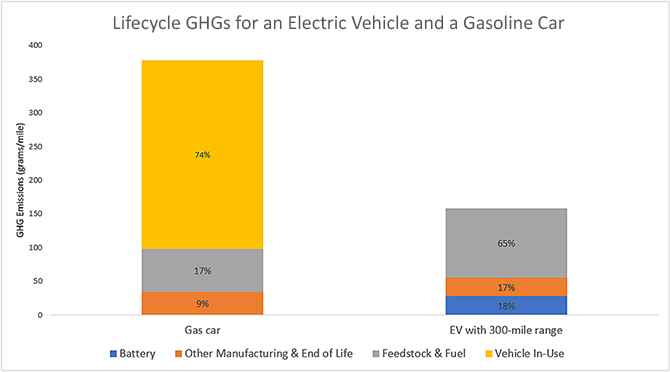
In short, electric cars have a lower carbon footprint over their entire life cycle. Studies show that in the US, a typical EV generates 60–70% fewer emissions than a gasoline-powered vehicle. In the EU, the figures are similar. And technology is making these emissions steadily decrease.
❌ MYTH: “Electric car batteries break down often, need to be replaced every few years, and are expensive.”
Reality: Modern batteries are built to last 8–10 years or 150,000–200,000 km. Many of them come with an 8–10 year factory warranty. You will most likely change your car before you need to change your battery.
Unlike the starter batteries used in gasoline vehicles, electric vehicle propulsion system batteries are designed to last the entire life of the vehicle, and recent data shows that they have very low failure rates.
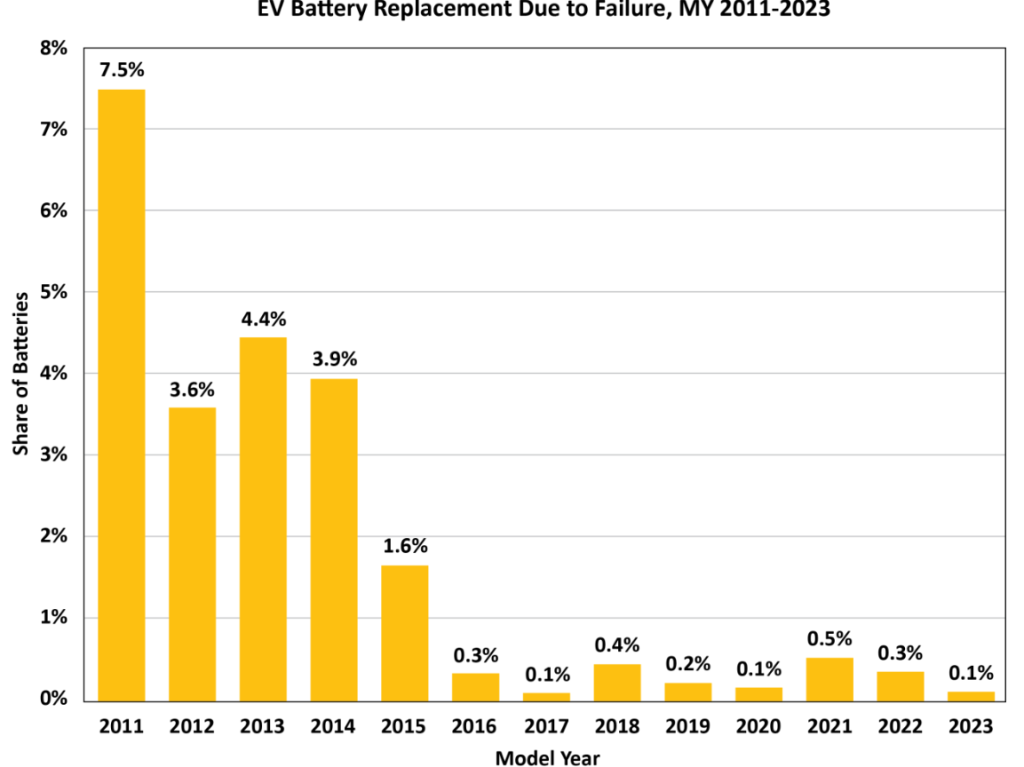
They don’t need to be replaced unless they fail. And studies show that these cases are the exception. According to the United States Environmental Protection Agency, recent studies of about 15,000 vehicles, from the first models until 2023, showed that battery replacement due to failure had an average rate of 2.5%.
Here’s what the failure situation looks like. In the last decade, the failure rate has decreased by over 70 times.
❌ MYTH: “You have nowhere to charge, the network is too weak”
Fact: Most electric vehicles can be charged with a standard 120-volt outlet (Level 1). To charge your vehicle faster, you can install a dedicated 240-volt outlet (Level 2). And we’re talking about charging your car at home. Charging that you can do from anywhere in your home.
It’s true that charging from a wall outlet at home can take around 8-10 hours, but you can leave your car charging overnight so it’s ready to go the next day. For an urban lifestyle with average mobility, this solution is all you need.
Of course, if you are transiting the country or need fast charging for long trips, you need to use a charging station. Although the infrastructure in Romania is far behind and we have to catch up, there are still over 2000 charging stations nationwide.
We offer nationwide coverage – so you have somewhere to charge if you use EV SPOTS
Even in the EV SPOTS network, you have nationwide coverage, with access to over 60 stations, most of them high-power, with fast charging options.
Access to electric vehicle charging will increase significantly in the coming years as a result of government initiatives. At European level, there are projects that support the development of the electric vehicle charging network along highways, as well as in cities and key points, with funds of hundreds of millions of euros. For example, here we can find an investment initiative of 422 million EURO in 39 e-mobility projects.
Romania has attracted over 45 million EURO from European funds, through a consortium, to develop the network of charging stations for electric cars and trucks.
So, we are in the midst of developing the network, and EV SPOTS is no exception, our mission being to constantly expand our own network and transform it into a 100% solar to drive network in the future.
❌ MYTH: “An electric car doesn’t have enough range to get you where you need to go every day.”
Reality: The range of electric vehicles is more than sufficient for typical daily use, especially in Romania.
There are studies that show that even in the United States (where the distances between 2 points are completely different) an electric car can have sufficient autonomy for the daily requirements of a household.
In 2022, a National Household Travel Survey was conducted, and over 98% of all American passenger road trips were less than 75 miles. That’s about 121km.
Think a little about your daily life. How often do you take trips that involve traveling more than 120km on a single road?
And even if you did, most electric cars have a total range that covers between:
- 280 – 300km – according to the analysis of the AsociațiaEnergiaInteligenta.ro
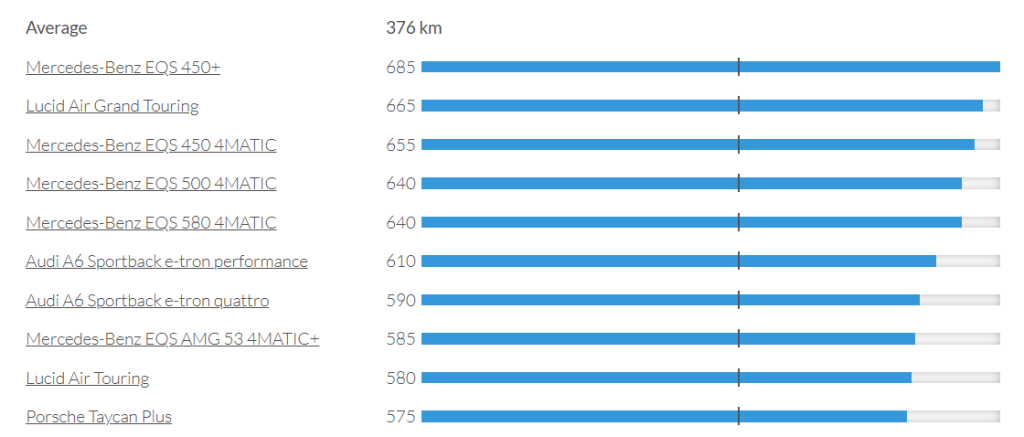
- 376km – according to the global portal EV-DATABASE.org
However, there are also models that offer even over 400 – 500km of autonomy. So, up to 3 – 4 times the requirement recorded by studies on US households.
Here is a top 10 cars by range, according to EV-Database.org.
❌ MYTH: “An electric car is not as safe as a classic car and can catch fire”
Reality: Statistics say otherwise – EVs are as safe (or even safer) than conventional cars. According to EV FireSafe (an organization funded by the Australian Department of Defence), only 0.0012% of EVs have reported fire incidents, compared to 0.1% for petrol cars.
What does this mean? That a conventional combustion car has a risk of apx. 80 times more likely to catch fire than an electric car.
Another study by the Swedish Emergency Management Agency – Sweden’s civil emergency authoritySwedish Civil Contingencies Agency, found the same thing: EVs are much less likely to catch fire compared to gasoline and diesel vehicles.
The study, corroborated with data from a US insurer using figures from the National Transportation Safety Board, indicates that battery-powered electric vehicles were subject to only 25 fires per 100,000 units sold.
In stark contrast, gasoline or diesel vehicles are subject to 1,530 fires per 100,000 units, and hybrid vehicles pose a significantly higher risk of 3,475 fires per 100,000 units.
So, hybrids do indeed have a high risk, but 100% electric cars have an almost non-existent risk compared to classic cars.
❌ MYTH: “EVs are expensive and costly to maintain.”
Fact: Although electric vehicles have a higher initial cost (purchase price), they tend to be more cost-effective in the long run. Lower fuel costs, reduced maintenance needs, and cheaper servicing make electric vehicles a more affordable option over the life of the vehicle compared to gasoline and diesel cars.
As we mentioned at the beginning of the article, maintenance costs are minimal, because the EV has infinitely fewer parts and does not require replacement of consumables.
In addition, there are solutions to even lower the purchase price. Incentives and benefits offered by government programs (such as Rabla), tax exemptions (such as road tax) and taxes, all of which make the price more affordable.
📊 How do you compare the total cost of an EV vs a classic one?
If you want to be realistic, you need to take into account not only the purchase price, but also all the factors:
- purchase price,
- the cost of energy,
- maintenance,
- tax,
- and available incentives.
In conclusion, you may pay more to buy your car, but from a total cost perspective, you will come out much cheaper with it, compared to a classic car.
Here is a top 5 of the most affordable electric cars, according to EV-Database.org.
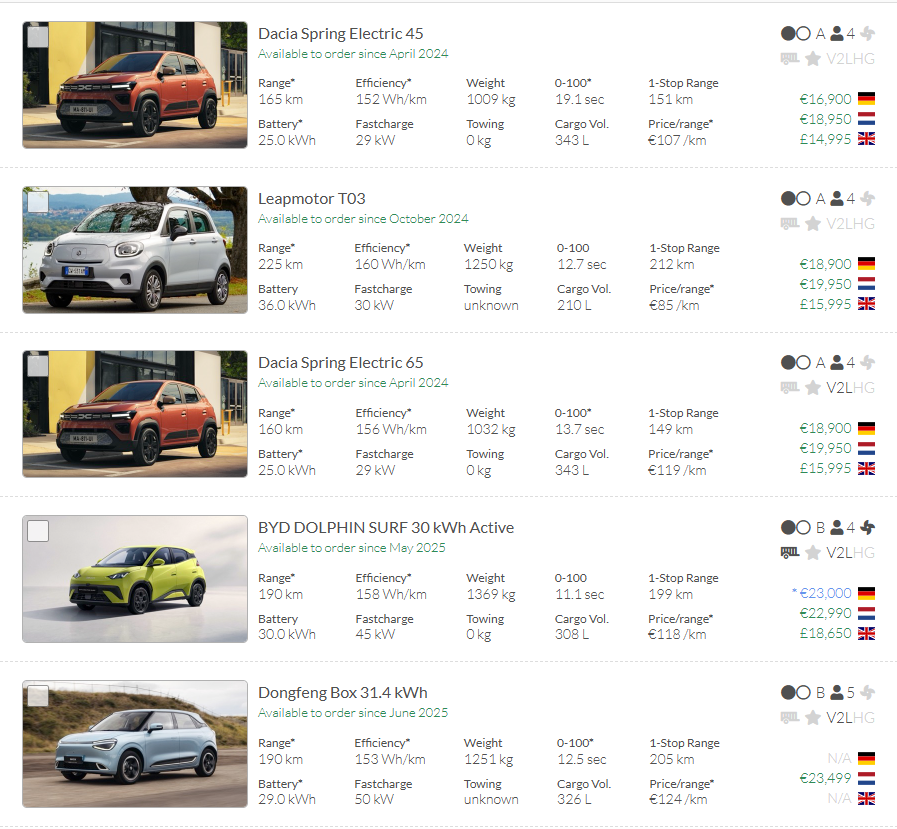
If you want to discover other affordable models, you can access the database here, filtered by price.
❌ MYTH: “The electric car is not made for winter driving.”
Reality: EVs also run very well in winter – but, indeed, their range decreases in cold conditions.
All cars – thermal or electric – consume more in winter. With EVs, however, it is felt more directly, because the energy is dispersed in different directions. The car consumes additional energy to heat the cabin and the battery, plus in winter you have reduced battery efficiency anyway due to low temperatures.
However, modern EVs have battery, seat, and steering wheel preheating, which reduces the impact on range. And even then, range drops by somewhere between 10 – 25% depending on environmental factors, driving style, and car model. You won’t be put at risk by this drop.
❌ MYTH: “You have to charge it all the time, it’s inconvenient and charging takes a long time.”
Reality: Let’s go back to the discussion about autonomy and distances traveled. When was the last time you traveled more than 120km on a single trip? But more than 280km? How often do you make such trips?
We ask because, if you don’t do them at least weekly, then you will only be able to charge your car once every few days, maybe even only once a week.
If you have a range of 300 – 350km and you drive an average of 50km daily, one charge will last you a week. In addition, you can do this charging at home (overnight) or at the office (during work hours).
✅ No lack of comfort (because you can sleep peacefully or take care of your tasks while the car is charging)
✅ No waiting time, because you don’t actually spend time charging, but the car charges while you do something else
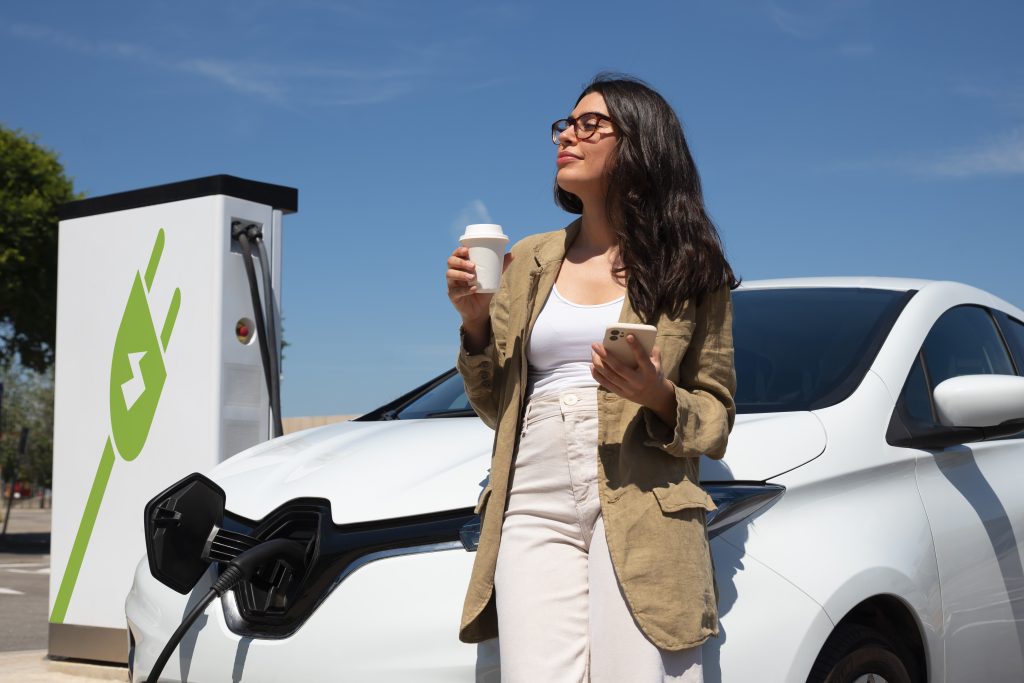
And even if we refer to charging at public stations, depending on the car model (if the battery is good), you can charge in 30 – 60 minutes, at a station in a premium location (like ours), where you have facilities and you can have your meal or drink a coffee quietly while the car charges. So, during your lunch break, you still solved the problem, without too much hassle and without worries.
❌ MYTH: “Electric car sales will slow down. It’s just a fad.”
A bizarre and persistent myth is that consumer appetite is shifting away from electric vehicles. Even a Times article from last year (October 2022) said that “electric vehicle sales appear to be slowing.”
And this myth has had quite a bit of support in the global press. Daily Telegraph columnist Matthew Lynn marked the peak of this trend with a commentary titled: “Nobody wants an electric car.”
However, the data says otherwise. After electric car sales exceed their quotas year after year, reaching spectacular increases of tens of percent, experts say that they will likely continue to become more widespread in the coming years.
It is expected that electric vehicles could account for a total of 45% of global passenger car sales by 2035.
We already have nearly 60 million electric cars on the roads around the world, according to the Global EV Outlook 2025.
We say that electric cars have long since passed the trend stage. Wouldn’t you agree?
In 2017, for example, only one in 70 new cars sold was an electric vehicle (1.4%). Just five years later, in 2022, this percentage had increased to one in seven (14.4%). The data seems to be keeping up with us!
❌ MYTH: “The electricity you use to charge your electric car is also generated from fossil fuels, so you’re polluting anyway.”
We take this myth very seriously at EV SPOTS. It’s true that we still have a lot of work to do on this aspect, but our vision is to develop a network of 100% sustainable charging stations. Our motto is “100% solar to drive” – which means that the energy you will take from the stations to charge your electric car comes from 100% renewable, environmentally friendly sources.
Our vision is 100% solar to drive – pollution-free, with energy from clean sources!
This is the vision we have had since the beginning. Hence the strategic partnership with VOLTA X Solar Systems – a company specialized in the design, installation, monitoring and maintenance of photovoltaic systems, storage systems and charging stations.
With the help of photovoltaic systems we capture clean energy, which we distribute to you, through charging stations, where you charge your car. This is the cycle that we strive to implement throughout the entire network of EV SPOTS stations.
And it’s not just us. As we move towards global net-zero emissions goals, more and more electricity now comes from renewable, green, or clean energy sources.
The reality is that greenhouse gas emissions from our electricity system have been reduced by over 70% since 1990. Plans call for 95% of electricity to come from low-carbon sources by 2030-2035.
And by 2050, all electricity will come from low-carbon sources. Which means electric vehicles will continue to become more and more environmentally friendly in the years to come.
What benefits do you have if you are an electric car driver?
We have already determined that electric vehicles (EVs) can contribute to improving the environment and even growing the economy, by:
- significant reductions in pollutant emissions
- increasing investments, generating new jobs and promoting a new sustainable economy
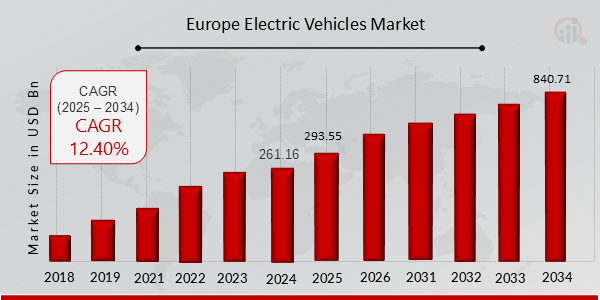
In fact, it is proven that the economy has a lot to gain from this area. The European electric vehicle market alone was estimated at approx. 260 (billion EUR) in 2024. Creating millions of jobs and engaging investors and companies at a macro level.
In addition, the annual growth is predicted to be spectacular, according to Market Research Future (image below).
And at the level of environmental impact, we have already discussed it, but let’s make a brief summary:
The transportation sector is the largest source of greenhouse gas emissions in the United States. A successful transition to clean transportation is more important than ever if we want a future where we can breathe clean air.
Electric and hybrid vehicles can bring significant benefits in terms of emissions compared to conventional vehicles:
- 100% electric vehicles (BEVs) do not produce any tailpipe emissions.
- Plug-in hybrid vehicles (PHEV) emit no exhaust gases when operating in all-electric mode.
Leaving that aside, what are your benefits if you choose to drive an EV?
Reduced transportation costs
First of all, you will have LOWER transportation costs.
As we mentioned earlier, EVs are more energy efficient than internal combustion engine vehicles. Fuel and maintenance costs are significantly lower. They don’t require oil changes, fuel filters, spark plugs, or exhaust system maintenance. So, in the end, you’ll pay a lot less to get from point A to point B.
That can mean more savings for your family and for the things that are important to you.
Positive impact on society and the environment
Electric cars do not emit exhaust gases such as carbon dioxide (CO₂), nitrogen oxides (NOₓ) or fine particles. Even taking into account electricity generation, battery production and more, EVs have a smaller carbon footprint over their lifetime compared to traditional vehicles.
As electricity increasingly comes from renewable sources, the environmental benefits grow exponentially. And you will be here to help develop a sustainable ecosystem.
In other words, you will help save the planet, clean the air, and build a healthy legacy for future generations.
It may sound cliché, but you really can have a positive impact. You can really leave something better behind you.
Renewable energy can be produced from various sources. And this diversity provides greater energy independence, reduces vulnerabilities and contributes to national energy security. In addition, through the intelligent mix of production – storage – consumption, we can restore the balance in nature and avoid natural disasters.
We really want to be a part of this! And we know you would too!
Well, switching to an electric car is an extremely important step in that direction.
A more comfortable lifestyle and a better driving experience
An electric car is easier to drive (it has no gears, it accelerates instantly, it has no clutch) and does not generate noise and odors. In addition, it does not vibrate, it has a much smoother driving sensation. And, of course, it offers you a higher standard of comfort.
Many drivers find the driving experience more relaxing and fluid after making the switch to an electric car.
Innovation and technological progress
For some of us, being an easy adopter of innovations and being technology-savvy is important. Because it makes life easier.
The adoption of EVs accelerates the development of clean technologies, such as extended-range batteries, advanced recycling, and smart grids.
More and more cities are investing in smart infrastructure: charging parking, integration with public transport, shared mobility solutions and even vehicle to home systems.
EVs are compatible with emerging technologies like autonomous vehicles, machine learning, and the internet of things (IoT). This only further advances technological progress, making our lives even more comfortable and simplified.
Real limitations and challenges. How the electrical industry is evolving
Even though electric cars come with obvious benefits, the full transition to electric mobility is not without challenges. In reality, there are still technological and logistical limitations that make large-scale adoption a gradual – but ever-accelerating – process.
🗺️ Station network: expanding but uneven
One of the real limitations in Romania is the insufficient coverage with fast stations in rural or isolated areas. And the fact that the electrical grid does not allow for development either, because we do not have available power.
That is why we are constantly making efforts to establish strategic partnerships between the public and private sectors, through which we can find solutions for network development.
🔬 Batteries of the future: towards solid-state and efficient recycling
Advances in batteries are one of the most important factors in the evolution of the EV industry. Solid-state technologies, which promise higher energy density and reduced charging time, are close to commercialization. The Chinese are constantly coming up with truly shocking innovations here (cars with 1000+km range and charging in under 15 – 20 minutes).
In parallel, advanced battery recycling solutions are being developed, which will reduce the environmental impact and ensure access to rare raw materials.
The industry is moving quickly, and many of these limitations are already on the way to being resolved.
What seemed like a challenge yesterday will become standard tomorrow.
How does EV SPOTS help you make the transition to an electric car easier?
As I said, the transition to electric cars is not just a smarter mobility choice. It’s a concrete step towards a more sustainable and efficient lifestyle. And we encourage this, through every action we take.
We strongly believe that every driver should have simple, fast and secure access to the infrastructure they need.
📍 A national network of charging stations for electric cars in continuous development
We have built and are constantly expanding a national network of charging stations, strategically designed and positioned. We cover areas with large cities, transit areas and important locations in everyday life. Most of our stations offer the 22 kW + 50 kW combination, covering both fast and slow charging needs. You have locations positioned in areas where you can spend your charging time usefully and pleasantly (restaurants, hotels, malls, etc.). But you also have express points – with a minimum of 4 parking spaces and 2 fast charge connectors simultaneously – for availability and instant access to charging places.
📲 EV SPOTS app – the reliable friend of electric car drivers
With the EV SPOTS app, you have everything you need in one place: see available stations in real time, start and stop charging, pay directly from your phone, manage payments simply and transparently. Whether you’re in the city or on a long trip, the app guides you to the nearest charging point.
🤝 Partnerships, support and advice
For all electric car drivers, we have a 24/7 call center with human operators, always available to solve problems. In addition, we have maintenance teams on the ground to solve any malfunctions at the stations. This ensures that we always have functional stations.
And for companies, but also for the public sector, we have different partnership options. We can take over the operation of existing stations, offering custody services (you bring the station, we monetize it through our application and promotion in the network). Or we can come and invest in a full service (we also bring the station and the platform and application – you only provide us with the location + connection).
Of course, we can negotiate and discuss each type of partnership individually. You can enter into a discussion with us here.
At EV SPOTS we are doing everything we can to develop the infrastructure and make our mark in this field of the future.
E-Mobility is no longer the future. It’s the present!
Understanding how an electric car works helps you. You’ll be able to make more informed decisions. And it will make it easier for you to transition to cleaner, more efficient technology. That’s exactly what we wanted to do with this guide. To help you understand.
- We compared electric vehicles with classic ones and saw the differences in consumption, emissions, maintenance, and performance.
- We explained how each component of an EV works – from the battery to the motor – and how it charges depending on the type of outlet or station.
- We have debunked common myths about this fascinating field.
- We discovered the real benefits, from environmental impact to cost advantages and supporting the economy.
- We saw that challenges still exist: autonomy, network, batteries.
- And, of course, we saw how EV SPOTS is an active part of this change.
Now, it’s your turn!
🚀 We invite you to take the next step!
Download the EV SPOTS app from the App Store or Google Play and explore the station map.
Follow us on social media for news, education, and real stories from the field.
Subscribe to our YouTube channel to experience the real life experience of an EV driver.
And if you have any questions – write to us!
We are here to guide you further.
STAY GREEN!